
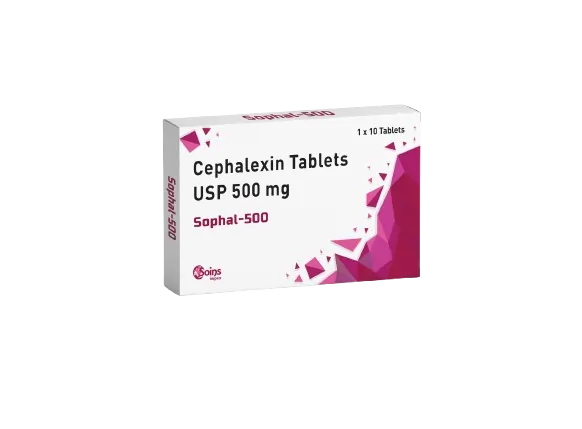
Sophal-500

Sophal-500

Generic Name:
Sophal-500
Therapeutic Category:
Antibacterial / First-Generation Cephalosporin
Mechanism of Action:
Bactericidal action. Cephalexin targets and disrupts bacterial cell wall synthesis. It binds irreversibly to penicillin-binding proteins (PBPs), which are critical enzymes required to cross-link the peptidoglycan layer of the cell wall. This results in the weakening of the bacterial cell structure, leading to cell lysis (bursting) and eventual cell death.

Indications (Therapeutic Uses)

Cephalexin 500 mg is a high-potency oral strength indicated for the treatment of various moderate-to-severe systemic infections caused by susceptible strains of Gram-positive and specific Gram-negative micro-organisms:

  • Respiratory Tract Infections: Treatment of acute exacerbations of chronic bronchitis, streptococcal pharyngitis (strep throat), tonsillitis, and mild community-acquired pneumonia.
  • Skin and Soft Tissue Infections: Management of deep or spreading superficial infections, including cellulitis, abscesses, impetigo, furunculosis (boils), and post-surgical or traumatic wound infections.
  • Urinary Tract Infections (UTIs): Treatment of uncomplicated acute cystitis and acute pyelonephritis (kidney infection) caused by susceptible Escherichia coli, Klebsiella pneumoniae, or Proteus mirabilis.
  • Bone and Joint Infections: Treatment of osteomyelitis (bone infection) and septic arthritis caused by susceptible staphylococcal strains.
  • Otitis Media: Management of acute middle ear infections when standard first-line options are inappropriate or failing.

Dosage & Administration

Website Note: The exact dosage framework, frequency, and length of treatment must be prescribed by a registered medical practitioner. The complete therapeutic cycle must be finished even if symptoms resolve early to prevent antibiotic resistance.

  • Standard Adult Dose: The normal adult oral dosage ranges from 250 mg to 500 mg administered every 6 hours (four times daily), or 500 mg to 1 g administered every 12 hours (twice daily), depending on the site and severity of the infection.
  • Maximum Daily Dose: Total daily intake for adults should generally not exceed 4 g per day unless directed by a physician for highly severe infections.
  • Administration Method: Tablets must be swallowed whole with a full glass of water. They should not be crushed or chewed.
  • Timing: Can be taken independently of food intake (on an empty or full stomach). However, patients experiencing mild gastrointestinal intolerance can take the tablet with meals or milk to improve stomach comfort.

Contraindications & Precautions

  • Absolute Contraindications: Do not use in individuals with a verified history of immediate or severe hypersensitivity reactions (e.g., anaphylaxis, angioedema, Stevens-Johnson syndrome) to cephalexin, any other cephalosporin-class antibiotic, or any inactive excipients in the tablet core.
  • Penicillin Cross-Sensitivity: Exercise extreme caution in patients with a known allergy to penicillin antibiotics. Due to structural similarities between the drug classes, cross-reactivity occurs in approximately 5% to 10% of penicillin-sensitive individuals, potentially inducing severe systemic allergic reactions.
  • Clostridium difficile-Associated Diarrhea (CDAD): Treatment with broad-spectrum cephalosporins disrupts the physiological microbial flora of the colon, allowing for the overgrowth of C. difficile. Symptoms can manifest as mild diarrhea or progress to life-threatening pseudomembranous colitis. Discontinue therapy immediately if severe, watery, or bloody diarrhea accompanied by abdominal cramping develops.
  • Renal Impairment Modification: Cephalexin is eliminated unchanged primarily via renal excretion. Patients with severe renal impairment (creatinine clearance less than 30 mL/min) require close clinical monitoring and a reduction in the total daily dose or an extension of the dosing interval.
  • Laboratory Interference: Use of cephalexin can result in a false-positive reaction for glucose in the urine when using copper reduction testing methods (e.g., Benedict’s or Fehling’s solution). It may also cause a positive direct Coombs’ test result.

Potential Side Effects

  • Common / Mild: Nausea, vomiting, diarrhea, dyspepsia (heartburn), abdominal localized pain, transient dizziness, headache, mild skin rash, urticaria (hives), and genital pruritus or vaginal candidiasis (yeast overgrowth).
  • Less Common / Severe: Anaphylactic shock, severe cutaneous adverse reactions (Stevens-Johnson syndrome, toxic epidermal necrolysis), toxic C. difficile colitis, hemolytic anemia, transient neutropenia/leukopenia, eosinophilia, and acute reversible interstitial nephritis.