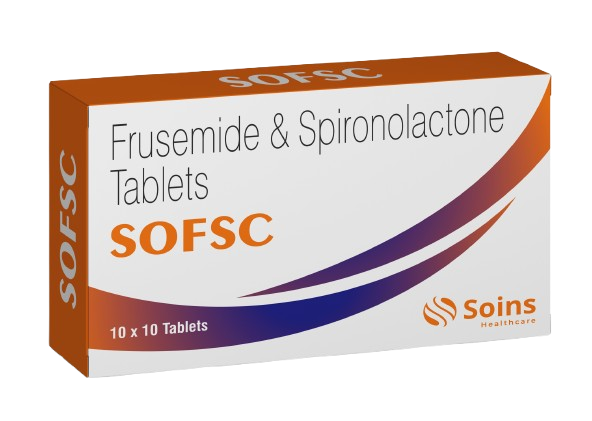
Frusemide & Spironolactone Tablets

Generic Name:
Frusemide & Spironolactone Tablets
Therapeutic Category:
Antihypertensive / Dual-Mechanism Diuretic Combination
Mechanism of Action:
Synergistic fluid clearance. Frusemide is a loop diuretic that blocks the $Na^+/K^+/2Cl^-$ co-transporter in the loop of Henle, causing a powerful excretion of water, sodium, and potassium. Spironolactone is a potassium-sparing diuretic that competitively blocks aldosterone receptors in the distal renal tubules, promoting sodium excretion while retaining potassium.

Indications (Therapeutic Uses)

This combination tablet is indicated for the management of fluid retention when single-diuretic therapy is insufficient or where maintaining potassium balance is critical:

  • Congestive Heart Failure Edema: To safely clear excessive fluid retention (edema) and alleviate breathing difficulties caused by pulmonary congestion, while minimizing the risk of diuretic-induced hypokalemia (low blood potassium).
  • Hepatic Cirrhosis with Ascites: First-line combination treatment to manage fluid accumulation in the abdominal cavity (ascites) and lower extremities caused by severe liver disease.
  • Nephrotic Syndrome: Management of stubborn edema associated with chronic renal disorders.
  • Essential Hypertension: Used as an adjunct treatment in cases where fluid retention contributes to high blood pressure and potassium stabilization is required.

Dosage & Administration

Website Note: Dosage must be individualized by a registered medical practitioner based on the patient’s fluid response, daily weight changes, and regular serum electrolyte monitoring.

  • Standard Dose: Commonly available in strengths such as 20mg/50mg or 40mg/50mg (Frusemide/Spironolactone). The typical dose is 1 to 2 tablets taken orally once daily.
  • Administration: Tablets must be swallowed whole with water. They should ideally be taken at a consistent time each day with breakfast or a main meal.
  • Timing: Avoid taking this medication late in the evening (typically past 6:00 PM) to prevent sleep disturbances caused by frequent nighttime urination (nocturia).

Contraindications & Precautions

  • Absolute Contraindications: Do not use in patients with known hypersensitivity to frusemide, spironolactone, or sulfonamide-derived drugs (sulfa allergies). Completely contraindicated in patients with anuria (complete absence of urination), acute renal failure, severe renal impairment (creatinine clearance less than 30 mL/min), Addison’s disease, or pre-existing hyperkalemia (high blood potassium).
  • Electrolyte Imbalances: While the two components work together to balance potassium, electrolyte shifts can still occur. Regular laboratory monitoring of serum potassium, sodium, uric acid, and creatinine is strongly recommended.
  • Hyperkalemia Risk: Spironolactone can cause dangerously high potassium levels, particularly in patients with kidney dysfunction, diabetes, or those using potassium supplements or salt substitutes containing potassium.
  • Ototoxicity (Hearing Alteration): High doses of frusemide can cause tinnitus or temporary hearing loss, especially when co-administered with other ototoxic drugs like aminoglycoside antibiotics.
  • Endocrine Disruptions: Spironolactone possesses anti-androgenic properties. Long-term use can lead to endocrine side effects including gynecomastia (breast enlargement in men), erectile dysfunction, and menstrual irregularities in women.

Potential Side Effects

  • Common / Mild: Increased frequency of urination, dizziness, headache, orthostatic hypotension (dizziness upon standing up), muscle cramps, nausea, diarrhea, and mild lethargy.
  • Less Common / Severe: Profound hyperkalemia or hyponatremia, gynecomastia, acute kidney injury, temporary hearing loss/tinnitus, worsening of gout (due to hyperuricemia), and severe cutaneous hypersensitivity reactions (such as Stevens-Johnson syndrome).