
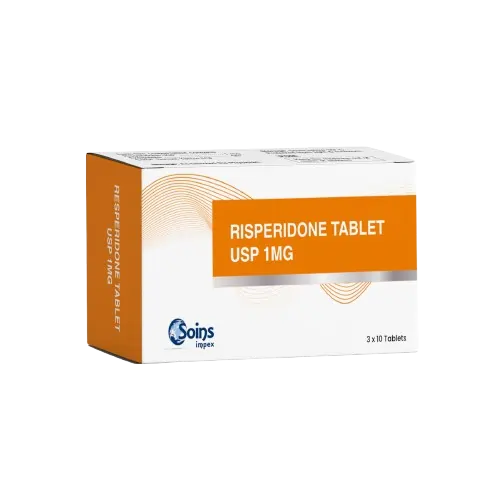
Risperidone Tablet USP 1 mg

Risperidone Tablet USP 1 mg

Generic Name:
Risperidone Tablet USP 1 mg
Therapeutic Category:
Atypical Antipsychotic (Second-Generation)
Mechanism of Action:
High-affinity dual antagonism. Risperidone selectively binds to and blocks central Serotonin (5-HT2​A) and Dopamine (D2​) receptors. By balancing neurotransmitter pathways in the brain, it treats positive symptoms (like hallucinations) through dopamine blockade, while serotonin antagonism helps alleviate negative symptoms (like emotional withdrawal) and minimizes common neurological side effects.

Indications (Therapeutic Uses)

Risperidone 1 mg is a foundational strength indicated for the management and stabilization of various psychiatric and behavioral conditions:

  • Schizophrenia: Acute treatment and long-term maintenance therapy to control hallucinations, delusions, disordered thinking, and social withdrawal in adults and adolescents.
  • Bipolar I Disorder (Manic/Mixed Episodes): Monotherapy or adjunctive therapy with lithium or valproate for the short-term treatment of acute manic or mixed episodes associated with Bipolar I Disorder.
  • Autism-Associated Irritability: Management of severe behavioral symptoms in children and adolescents (ages 5 to 16), including severe tantrums, aggression, self-injurious behavior, and rapid mood changes.
  • Off-Label Uses: Sometimes used in low doses under strict specialist guidance for refractory severe depression, Tourette’s syndrome, or severe behavioral disturbances in dementia.

Dosage & Administration

Website Note: Dosage must be tightly regulated, titrated carefully, and monitored exclusively by a registered psychiatrist or medical practitioner. Dose adjustments are based on clinical response and tolerability.

  • Standard Adult Initiation (Schizophrenia): Usually started at 1 mg to 2 mg per day. The dose is typically increased in gradual increments of 1 mg daily to a target maintenance dose of 4 mg to 6 mg per day, administered either once daily or in two divided doses.
  • Elderly or Debilitated Patients: Initiation must begin lower, typically at 0.5 mg twice daily, and titrated upwards very slowly to minimize side effects.
  • Administration Method: Tablets must be swallowed whole with a glass of water, independently of food intake (can be taken on an empty or full stomach).
  • Adherence Warning: Do not stop taking this medication suddenly. Abrupt discontinuation can trigger a severe relapse of psychiatric symptoms or withdrawal discomfort. Tapering must always follow a structured medical plan.

Contraindications & Precautions

  • Absolute Contraindications: Do not use in patients with a verified history of hypersensitivity to risperidone, paliperidone (its active metabolite), or any inactive excipients in the tablet core.
  • Elderly Dementia Warning (Black Box Warning): Increased risk of mortality in elderly patients with dementia-related psychosis. Risperidone is not approved for the treatment of patients with dementia-related psychosis, as clinical trials have shown a significantly higher risk of death, primarily due to cardiovascular events (e.g., heart failure) or infectious complications (e.g., pneumonia).
  • Neuroleptic Malignant Syndrome (NMS): A potentially fatal symptom complex associated with antipsychotic drugs. Monitor for high fever, muscle rigidity, altered mental status, and autonomic instability (irregular pulse or blood pressure). Discontinue immediately if NMS is suspected.
  • Tardive Dyskinesia: Chronic use can cause this potentially irreversible syndrome characterized by involuntary, rhythmic movements of the tongue, face, mouth, or jaw. The risk increases with long-term exposure and high cumulative doses.
  • Metabolic Changes: Second-generation antipsychotics can cause significant metabolic side effects, including severe weight gain, hyperprolactinemia (elevated prolactin levels leading to gynecomastia or menstrual changes), hyperglycemia (worsening glucose tolerance), and dyslipidemia. Regular blood sugar and lipid monitoring is strongly advised.
  • Orthostatic Hypotension & QT Prolongation: May cause dizziness upon standing due to alpha-1 adrenergic blocking activity. It should also be used with caution in patients with known cardiovascular disease or a family history of QT prolongation.

Potential Side Effects

  • Common / Mild: Parkinsonism (tremors, muscle stiffness, slow movement), somnolence (excessive drowsiness), dizziness, increased appetite, weight gain, upper respiratory tract infections, dry mouth, blurred vision, and restlessness (akathisia).
  • Less Common / Severe: Neuroleptic Malignant Syndrome, tardive dyskinesia, severe hyperprolactinemia, stroke or transient ischemic attack (particularly in elderly patients), severe neutropenia/leukopenia, and priapism (prolonged, painful erection requiring emergency care).