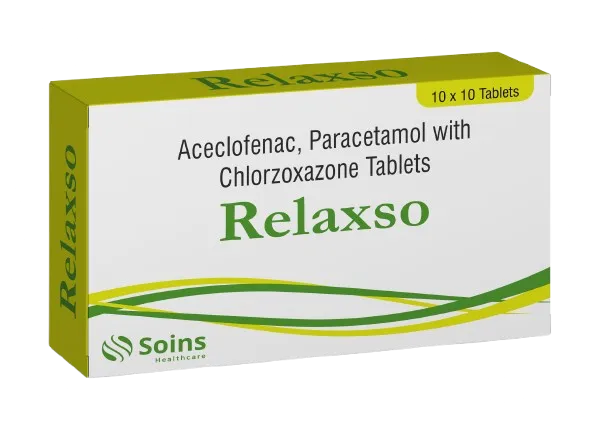
Relaxso

Generic Name:
Relaxso
Therapeutic Category:
Muscle Relaxant / Analgesic / Non-Steroidal Anti-Inflammatory Drug (NSAID) Combination
Mechanism of Action:
Triple-action pain and spasm relief. Aceclofenac inhibits cyclooxygenase ($COX$) enzymes to prevent prostaglandin synthesis, reducing localized inflammation. Paracetamol exerts central analgesic and antipyretic effects by elevating the pain threshold. Chlorzoxazone acts centrally at the spinal cord and subcortical areas of the brain to inhibit multi-synaptic reflex arcs involved in inducing and maintaining muscle spasms.

Indications (Therapeutic Uses)

This combination tablet is indicated for the short-term relief of severe, painful musculoskeletal spasms and associated inflammatory conditions:

  • Muscle Spasms & Rigid Stiffness: Relief of acute, painful muscle spasms associated with lower back pain (lumbago), neck stiffness (torticollis), and fibrositis.
  • Traumatic Musculoskeletal Injuries: Fast-acting management of severe pain and spasm originating from sprains, strains, fractures, or sports injuries.
  • Post-Operative Orthopedic Pain: Alleviation of painful skeletal muscle spasms and inflammatory pain following orthopedic surgeries or joint manipulations.
  • Arthritic Flare-ups with Spasms: Management of acute exacerbations of osteoarthritis, rheumatoid arthritis, or ankylosing spondylitis when accompanied by painful muscle guarding.

Dosage & Administration

Website Note: Dosage and duration of therapy must be individualized by a registered medical practitioner based on the patient’s pain severity and clinical profile.

  • Standard Dose: Typically one tablet (commonly formulated as Aceclofenac 100 mg + Paracetamol 325 mg/500 mg + Chlorzoxazone 250 mg/500 mg) taken orally twice daily.
  • Administration: Tablets must be swallowed whole with water. Do not crush, break, or chew the tablet.
  • Timing: Must be taken strictly after meals or with food to protect the gastric mucosa and reduce the risk of gastrointestinal irritation.
  • Duration: Therapy should be limited to the shortest duration necessary to achieve symptom relief, typically not exceeding 7 to 10 days of continuous use.

Contraindications & Precautions

  • Absolute Contraindications: Do not use in patients with a history of hypersensitivity to aceclofenac, paracetamol, chlorzoxazone, or other NSAIDs (e.g., history of asthma, hives, or acute rhinitis induced by aspirin). Strictly contraindicated in patients with active peptic ulceration, recent gastrointestinal bleeding, severe hepatic or renal impairment, or severe heart failure.
  • Hepatotoxicity Warning: This formulation contains paracetamol and chlorzoxazone, both of which are metabolized by the liver. Serious, sometimes fatal, drug-induced hepatotoxicity has been reported with chlorzoxazone. Avoid concurrent use of alcohol or other paracetamol-containing products, as this dramatically increases the risk of acute liver failure.
  • Gastrointestinal Risk: Aceclofenac increases the risk of serious gastrointestinal events, including ulceration, bleeding, and perforation of the stomach or intestines, which can be fatal. Use with extreme caution in elderly patients.
  • Central Nervous System (CNS) Depression: Chlorzoxazone causes drowsiness, dizziness, and lightheadedness. Patients should be strictly warned against operating heavy machinery, driving, or performing hazardous tasks while taking this medication.

Potential Side Effects

  • Common / Mild: Drowsiness, dizziness, lightheadedness, nausea, dyspepsia (heartburn), abdominal discomfort, diarrhea, headache, and a harmless discoloration of urine (orange or purple-red) caused by a chlorzoxazone metabolite.
  • Less Common / Severe: Severe drug-induced hepatotoxicity (characterized by jaundice, dark urine, or elevated liver enzymes), gastrointestinal hemorrhage or bleeding, anaphylactic allergic reactions (bronchospasm, angioedema), acute kidney injury, and severe skin reactions (such as Stevens-Johnson syndrome or toxic epidermal necrolysis).