Stimulates insulin secretion from the $\beta$-cells of the islets of Langerhans in the pancreas by selectively binding to sulfonylurea receptors, closing ATP-dependent potassium channels, and triggering calcium influx to release insulin.
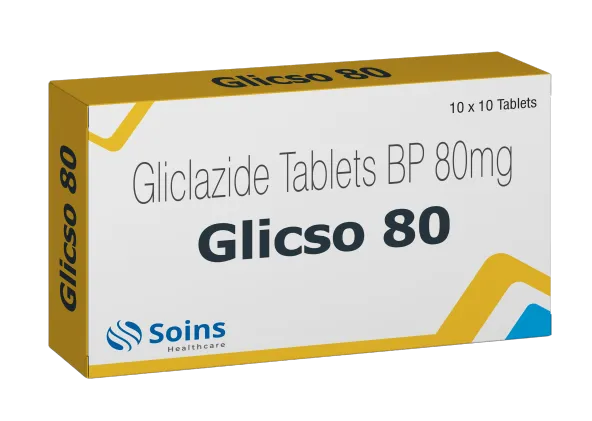
Gliclazide 80 mg is indicated for the management of type 2 diabetes mellitus when lifestyle alterations alone are no longer sufficient:
Type 2 Diabetes Mellitus: Long-term glycemic control in adult patients whose blood glucose levels cannot be controlled by dietary modification, weight loss, and physical exercise alone.
Microvascular Prevention: Used as part of an intensive glucose-control strategy to reduce the risk of diabetes-related microvascular complications (such as diabetic retinopathy or nephropathy).
Dosage & Administration
Website Note: Dosage must be individualized by a registered medical practitioner based on regular blood glucose monitoring and HbA1c levels.
Standard Dose: The initial dose is usually 40 mg to 80 mg daily (half to one tablet). This may be gradually titrated up to a maximum dose of 320 mg daily based on the patient’s metabolic response.
Administration: Tablets must be swallowed whole with a glass of water. If a dose is missed, the subsequent dose must not be doubled.
Timing: Must be taken with meals—typically with breakfast or the first main meal of the day—to match insulin release with carbohydrate intake and prevent low blood sugar.
Contraindications & Precautions
Absolute Contraindications: Do not use in patients with known hypersensitivity to gliclazide, other sulfonylureas, or sulfonamides. Strictly contraindicated in patients with type 1 diabetes mellitus, diabetic pre-coma or ketoacidosis, severe renal or hepatic insufficiency, or during treatment with miconazole.
Hypoglycemia Risk: Gliclazide can cause severe, prolonged hypoglycemia (abnormally low blood sugar). Risk factors include irregular meals, accidental fasting, malnutrition, severe renal impairment, or unaccustomed physical exertion.
Stress Conditions: In patients undergoing surgical procedures, trauma, or severe infections, blood glucose control may be lost. It may be necessary to temporarily discontinue gliclazide and transition to insulin therapy.
G6PD Deficiency: Treatment of patients with glucose-6-phosphate dehydrogenase (G6PD) deficiency with sulfonylurea agents can lead to hemolytic anemia. Caution should be exercised, and alternative non-sulfonylurea therapies should be considered.
Potential Side Effects
Common / Mild: Hypoglycemia (characterized by sweating, tremors, palpitations, anxiety, headache), gastrointestinal disturbances (nausea, indigestion, diarrhea, constipation), and transient visual disturbances (especially at the start of therapy due to changes in blood glucose levels).
Less Common / Severe: Severe prolonged hypoglycemia, hepatic dysfunction (cholestatic jaundice, hepatitis, elevated liver enzymes), hematological disorders (leukopenia, thrombocytopenia, anemia), and severe cutaneous allergic reactions (such as rash, pruritus, or Stevens-Johnson syndrome).