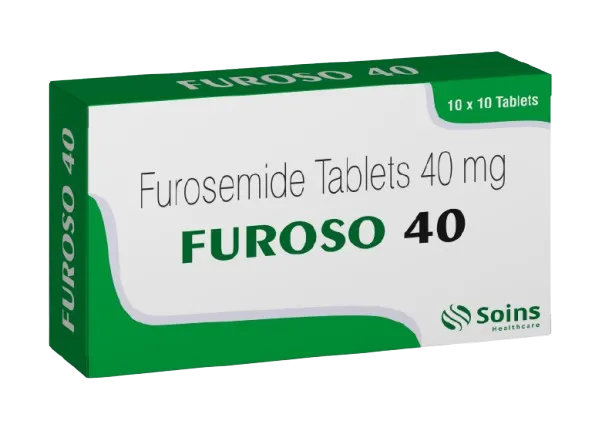
Furoso 40

Generic Name:
Furoso 40
Therapeutic Category:
Loop Diuretic / “Water Tablet”
Mechanism of Action:
Inhibits the $Na^+/K^+/2Cl^-$ co-transporter system in the thick ascending limb of the loop of Henle in the kidneys. This blocks the reabsorption of sodium, potassium, and chloride ions, driving a profound excretion of water and electrolytes into the urine.

Indications (Therapeutic Uses)

Furosemide 40 mg is indicated for the management of fluid retention and specific cardiovascular disorders:

  • Edema Associated with Heart Failure: To reduce systemic fluid volume overload, alleviate pulmonary congestion (fluid in lungs), and ease peripheral swelling (edema) in patients with congestive heart failure.
  • Hepatic Cirrhosis Edema: Management of fluid retention and ascites (fluid accumulation in the abdominal cavity) secondary to liver disease, often paired with an aldosterone antagonist.
  • Renal Disease Edema: Reduction of fluid retention accompanying nephrotic syndrome or chronic kidney disease.
  • Hypertension (High Blood Pressure): Used alone or in combination with other antihypertensive medications, particularly in patients with concurrent renal impairment or heart failure where thiazide diuretics are ineffective.

Dosage & Administration

Website Note: Dosage must be individualized by a registered medical practitioner based on the patient’s fluid balance, weight changes, and electrolyte levels.

  • Standard Dose (Edema): The initial adult dose is typically 20 mg to 80 mg (half to two tablets) taken orally as a single dose. If a satisfactory diuretic response is achieved, this may be maintained or adjusted to a lower maintenance dose.
  • Standard Dose (Hypertension): Frequently started at 40 mg twice daily, adjusted based on the patient’s blood pressure response.
  • Administration: Tablets must be swallowed whole with water.
  • Timing: Should ideally be taken on an empty stomach (one hour before or two hours after a meal) to optimize absorption. Avoid taking this medication late in the evening (typically past 6:00 PM) to prevent sleep disturbances from nighttime urination (nocturia).

Contraindications & Precautions

  • Absolute Contraindications: Do not use in patients with known hypersensitivity to furosemide, sulfonamides (sulfa drugs), or any component of the tablet. Completely contraindicated in patients with anuria (complete absence of urine production), hepatic coma/pre-coma states, or severe electrolyte depletion (especially severe hypokalemia or hyponatremia).
  • Profound Diuresis and Dehydration: Furosemide is a potent diuretic. In excessive amounts, it can lead to severe dehydration, profound reduction in blood volume, and circulatory collapse with a risk of vascular thrombosis or embolism.
  • Electrolyte Imbalances: Can cause significant losses of potassium (hypokalemia), sodium (hyponatremia), magnesium (hypomagnesemia), and calcium. Regular laboratory monitoring of serum electrolytes, blood urea nitrogen (BUN), and creatinine is strongly recommended.
  • Ototoxicity (Hearing Damage): Tinnitus, reversible or irreversible hearing impairment, and deafness have been reported, usually when high doses are given, in patients with severe renal impairment, or when co-administered with other ototoxic drugs (like aminoglycoside antibiotics).
  • Hyperuricemia and Gout: May elevate serum uric acid levels, which can precipitate or worsen acute gouty arthritis in susceptible individuals.

Potential Side Effects

  • Common / Mild: Increased frequency of urination, orthostatic hypotension (dizziness or lightheadedness when standing up), muscle cramps, headache, dizziness, blurred vision, and mild gastrointestinal upset (nausea, constipation).
  • Less Common / Severe: Severe electrolyte imbalances (severe hypokalemia triggering cardiac arrhythmias), acute kidney reaction or failure, ototoxicity (temporary or permanent hearing loss), pancreatitis, hyperglycemia (worsening glucose tolerance in diabetes), and severe skin hypersensitivity reactions (such as Stevens-Johnson syndrome or photosensitivity).