
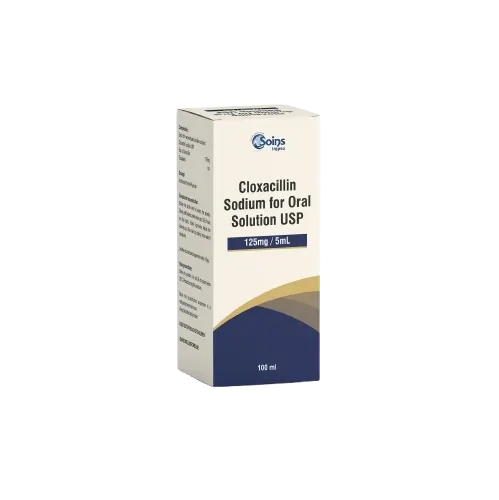
Cloxacillin Sodium for Oral Solution USP

Cloxacillin Sodium for Oral Solution USP

Generic Name:
Cloxacillin Sodium for Oral Solution USP
Therapeutic Category:
Antibacterial / Penicillinase-Resistant Penicillin (Beta-lactam antibiotic)
Mechanism of Action:
Bactericidal action. Cloxacillin acts by binding to specific penicillin-binding proteins (PBPs) located inside the bacterial cell wall. This halts the final transpeptidation stage of cell wall synthesis, preventing the cross-linking of peptidoglycan chains. This structural disruption causes cell wall instability, resulting in osmotic lysis and cell death. Crucially, its unique bulky side chain shields its beta-lactam ring from being hydrolyzed by staphylococcal beta-lactamase (penicillinase) enzymes, making it highly effective against penicillin-resistant Staphylococcus aureus.

Indications (Therapeutic Uses)

Cloxacillin Sodium Oral Solution is a liquid formulation primarily designed for infants, young children, and adult patients who have difficulty swallowing capsules. It is specifically targeted for treating infections caused by penicillinase-producing staphylococci:

  • Skin and Soft Tissue Infections: Treatment of localized pyogenic infections such as impetigo, cellulitis, furuncles (boils), carbuncles, abscesses, and wound infections caused by susceptible staphylococcal strains.
  • Upper Respiratory Tract Infections: Management of tonsillitis, pharyngitis, and sinusitis when caused by penicillinase-producing staphylococci.
  • Lower Respiratory Tract Infections: Treatment of acute bronchitis or bronchopneumonia secondary to staphylococcal colonization.
  • Osteomyelitis & Septic Arthritis Adjunct: Follow-up oral treatment for bone and joint infections once initial intravenous antibiotic therapy has stabilized the patient.

Dosage & Administration

Website Note: The exact dosage volume, strength (typically 125 mg / 5 mL or 250 mg / 5 mL), and duration of treatment must be calculated by a registered medical practitioner based on patient age, weight, and infection severity. The full course must be finished to avoid bacterial resistance.

  • Standard Adult Dose: Typically 250 mg to 500 mg administered orally four times daily (every 6 hours).
  • Standard Pediatric Dose (Children weighing less than 20 kg): Calculated based on body weight, usually 25 mg/kg to 50 mg/kg per day, divided into four equally spaced doses given every 6 hours. For severe infections, the dose may be doubled under strict medical supervision.
  • Reconstitution Instructions (Dry Powder Formulations):
    1. Tap the bottle gently to loosen the dry powder inside.
    2. Add boiled and cooled water up to roughly half of the fill line marked on the bottle.
    3. Close the cap tightly and shake vigorously to disperse the powder.
    4. Add more water precisely up to the fill mark line and shake well again until a smooth, uniform solution is formed.
  • Administration & Timing: Take strictly on an empty stomach, either 1 hour before or 2 hours after meals. The presence of food significantly reduces the gastrointestinal absorption of cloxacillin sodium. Shake the bottle well before every single dose and use a calibrated measuring device.
  • Storage of Reconstituted Solution: Once mixed with water, the oral solution must be stored in a refrigerator (between 2°C and 8°C) and used within 7 to 14 days as specified by the manufacturer. Do not freeze. Discard any unused portion after the treatment period.

Contraindications & Precautions

  • Absolute Contraindications: Do not use in individuals with a verified history of hypersensitivity or severe allergic reactions (e.g., anaphylaxis, hives, bronchospasm) to cloxacillin, other penicillins, or any inactive excipients.
  • Cephalosporin Cross-Sensitivity Risk: Exercise extreme caution in patients with a known history of hypersensitivity to cephalosporins or other beta-lactam antibiotics. Cross-reactivity occurs in up to 10% of penicillin-sensitive individuals, which can trigger severe anaphylactic reactions.
  • Clostridium difficile-Associated Diarrhea (CDAD): Treatment with cloxacillin alters the colon’s normal microbial flora, potentially facilitating the overgrowth of C. difficile. Symptoms can range from mild diarrhea to life-threatening pseudomembranous colitis. Discontinue therapy immediately if severe, watery, or bloody diarrhea accompanied by intense abdominal cramping develops.
  • Renal Impairment Dosing: Cloxacillin is excreted via renal and biliary routes. While severe dosage adjustments are rarely needed for mild impairment, patients with severe renal failure (creatinine clearance less than 10 mL/min) should have their total daily dosage monitored closely to avoid neurotoxicity (seizures).
  • Sodium Content Warning: Cloxacillin Sodium contains a significant amount of sodium per dose. This should be taken into strict consideration for patients on controlled sodium diets, such as those with severe congestive heart failure, renal impairment, or severe hypertension.

Potential Side Effects

  • Common / Mild: Gastrointestinal disturbances (nausea, vomiting, diarrhea, epigastric distress), flatulence, an altered or unpleasant taste in the mouth, and mild maculopapular skin rashes.
  • Less Common / Severe: Anaphylactic shock, angioedema, severe cutaneous adverse reactions (such as Stevens-Johnson syndrome), severe C. difficile colitis, transient neutropenia/leukopenia, interstitial nephritis, elevated liver enzymes, and central nervous system toxicity (convulsions, typically at very high doses or in patients with renal failure).