Selectively blocks $\beta_1$-adrenergic receptors in the heart, reducing heart rate, cardiac output, and blood pressure while lowering myocardial oxygen demand.
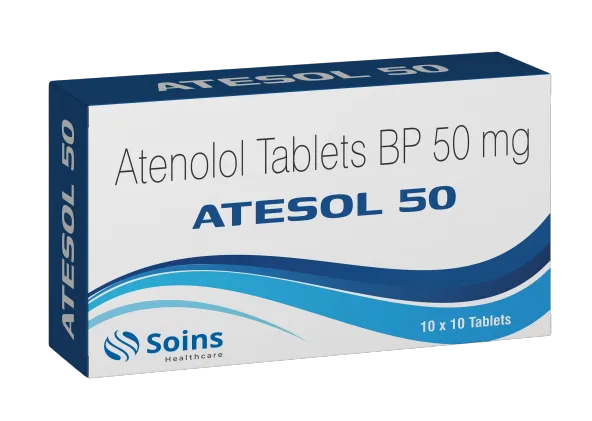
Atenolol 50 mg is indicated for the management of cardiovascular disorders where reduction of cardiac workload and blood pressure is required:
Hypertension (High Blood Pressure): Used alone or in combination with other antihypertensive agents to lower blood pressure and reduce cardiovascular mortality risks.
Angina Pectoris: Long-term prophylaxis and management of chronic stable chest pain caused by coronary artery disease.
Cardiac Arrhythmias: Control of supraventricular and ventricular arrhythmias, as well as sinus tachycardia.
Post-Myocardial Infarction: Early and late intervention following a heart attack to improve long-term survival and reduce the risk of reinfarction.
Dosage & Administration
Website Note: Dosage must be individualized by a registered medical practitioner based on the patient’s specific cardiovascular profile, age, and renal function.
Standard Dose:
Hypertension: Typically 50 mg taken orally once daily. If an optimal response is not achieved in 1 to 2 weeks, the dose may be increased to 100 mg once daily.
Angina: 50 mg to 100 mg taken orally once daily.
Administration: Tablets must be swallowed whole with water. They can be taken with or without food, but should ideally be taken at the same time each day.
Renal Impairment Modification: Because atenolol is excreted via the kidneys, dosage adjustments are required for patients with severe renal impairment (e.g., maximum 50 mg daily or 25 mg daily depending on creatinine clearance).
Contraindications & Precautions
Absolute Contraindications: Do not use in patients with known hypersensitivity to atenolol or other beta-blockers. Strictly contraindicated in cases of sinus bradycardia (heart rate less than 45–50 bpm), cardiogenic shock, second- or third-degree heart block, overt cardiac failure, or sick sinus syndrome.
Abrupt Cessation Warning:Do not discontinue therapy abruptly. Suddenly stopping a beta-blocker can cause a severe rebound effect, worsening angina, inducing cardiac arrhythmias, or precipitating a myocardial infarction. Doses must be tapered gradually over 1 to 2 weeks under medical supervision.
Bronchospasm / Asthma: Although cardioselective, selectivity is not absolute. Use with extreme caution in patients with chronic obstructive pulmonary disease (COPD) or asthma, as it may induce bronchospasm.
Masking Hypoglycemia: May mask the warning signs of acute hypoglycemia (specifically tachycardia and tremors) in patients with diabetes mellitus.
Potential Side Effects
Common / Mild: Bradycardia (slow heart rate), cold extremities (due to peripheral vasoconstriction), fatigue, dizziness, lethargy, postural hypotension, and gastrointestinal disturbances (nausea, diarrhea).
Less Common / Severe: Deepening of heart block, precipitation or worsening of heart failure, severe bronchospasm, sleep disturbances/nightmares, depression, and alopecia (hair thinning).