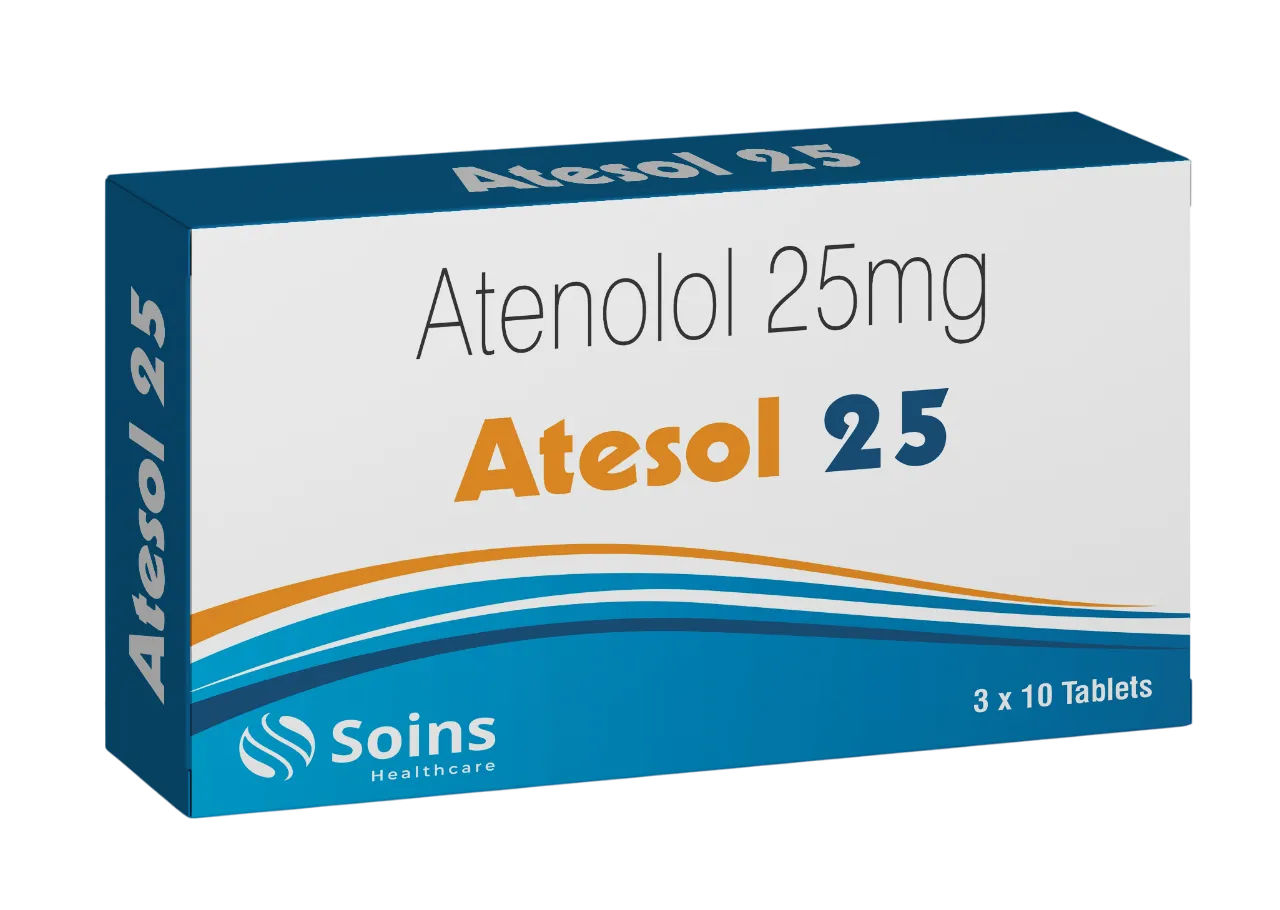
Atenolol 25 mg is a low-dose formulation indicated for initial titration, maintenance, or combination management of cardiovascular disorders:
Mild to Moderate Hypertension: Used alone or as an adjunct with other antihypertensive agents (such as diuretics) to control blood pressure.
Angina Pectoris: Long-term management and prophylaxis of chronic stable angina to reduce the frequency of chest pain episodes.
Cardiac Arrhythmias: Stabilization and control of supraventricular tachycardias, premature ventricular contractions, and sinus tachycardia.
Elderly or Renal Patient Management: Used for patients requiring conservative dosing due to advanced age or reduced kidney function.
Dosage & Administration
Website Note: Dosage must be individualized by a registered medical practitioner based on the patient’s specific cardiovascular profile, age, and renal clearance.
Standard Dose:
Hypertension: Frequently initiated at 25 mg to 50 mg taken orally once daily. The dose may be up-titrated based on clinical efficacy.
Angina: Typically managed between 50 mg to 100 mg daily; a 25 mg tablet is ideal for gradual dose adjustments.
Administration: Tablets must be swallowed whole with water, preferably at the same time each day. It can be taken independently of food intake.
Renal Impairment Dosing: For patients with severe renal impairment (creatinine clearance between 15–35 mL/min), the maximum dose should not exceed 50 mg daily. For clearance below 15 mL/min, the maximum dose is 25 mg daily or 50 mg every other day.
Contraindications & Precautions
Absolute Contraindications: Do not use in patients with known hypersensitivity to atenolol or other beta-blockers. Strictly contraindicated in cases of severe sinus bradycardia (heart rate less than 50 bpm), cardiogenic shock, second- or third-degree heart block, sick sinus syndrome, or uncompensated heart failure.
Abrupt Cessation Warning:Do not stop taking this medication suddenly. Abrupt withdrawal can precipitate a severe rebound effect, including worsening of angina, development of dangerous cardiac arrhythmias, or acute myocardial infarction. Doses must be tapered gradually over 1 to 2 weeks under close medical supervision.
Bronchospasm Risk: Selectivity for $\beta_1$ receptors is not absolute. Use with extreme caution in patients with asthma, chronic bronchitis, or severe chronic obstructive pulmonary disease (COPD), as it can induce bronchospasm.
Diabetic Monitoring: May mask key warning signs of acute hypoglycemia (especially a rapid heart rate and tremors) in patients managing diabetes mellitus.
Potential Side Effects
Common / Mild: Bradycardia (slow heart rate), coldness in the hands and feet, fatigue, dizziness, lightheadedness when standing up, lethargy, and mild gastrointestinal symptoms (nausea, diarrhea).
Less Common / Severe: Heart block progression, worsening or precipitation of heart failure, severe bronchospasm, sleep disturbances, vivid nightmares, depression, and reversible alopecia (hair thinning).