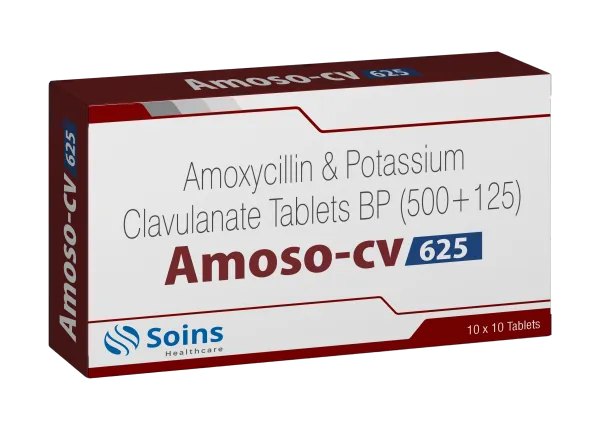
Amoso-cv 625

Generic Name:
Amoso-cv 625
Therapeutic Category:
Antibacterial / β-lactamase Inhibitor Combination
Mechanism of Action:
Dual-action antibacterial attack. Amoxicillin prevents bacterial cell wall synthesis leading to cell death. Potassium clavulanate inactivates β-lactamase enzymes produced by resistant bacteria, protecting amoxicillin from degradation and extending its spectrum.

Indications (Therapeutic Uses)

This combination tablet is indicated for the treatment of severe, acute bacterial infections caused by susceptible strains when β-lactamase-mediated resistance is suspected:

  • Lower Respiratory Tract Infections: Acute exacerbations of chronic bronchitis and community-acquired pneumonia.
  • Upper Respiratory Tract Infections: Severe acute bacterial sinusitis and acute otitis media (middle ear infection).
  • Urinary Tract Infections (UTIs): Uncomplicated cystitis and complicated pyelonephritis (kidney infection).
  • Skin and Soft Tissue Infections: Severe cellulitis, animal bites, and dental abscesses with spreading cellulitis.

Dosage & Administration

Website Note: Dosage and duration of therapy must be determined by a registered medical practitioner based on the severity, type, and site of infection.

  • Standard Dose: For adults and pediatric patients weighing 40 kg or more, the standard dose is one tablet (500 mg/125 mg) taken three times daily, or one stronger variant twice daily depending on infection severity.
  • Administration: Tablets must be swallowed whole with water—do not crush or chew.
  • Timing: Should be administered at the start of a meal to optimize absorption and significantly minimize potential gastrointestinal intolerance.
  • Course Completion: The full prescribed course must be finished even if symptoms improve early, to prevent the development of bacterial resistance.

Contraindications & Precautions

  • Absolute Contraindications: Do not use in patients with a history of severe hypersensitivity (e.g., anaphylaxis, Stevens-Johnson syndrome) to amoxicillin, penicillin, or any other β-lactam agent (such as cephalosporins). Absolutely contraindicated in patients with a history of cholestatic jaundice or hepatic impairment associated with this combination.
  • Hepatic Toxicity: Hepatic dysfunction (including jaundice and hepatitis) has been reported. It is usually reversible, but severe cases can occur, particularly in elderly or male patients on prolonged treatment.
  • Clostridium difficile-Associated Diarrhea (CDAD): Nearly all antibacterial agents can disrupt normal colon flora, leading to overgrowth of C. difficile, ranging in severity from mild diarrhea to fatal colitis.
  • Mononucleosis Warning: Amoxicillin should not be given to patients suspected of having infectious mononucleosis, as a high percentage of these patients develop an erythematous skin rash when treated with the drug.

Potential Side Effects

  • Common / Mild: Diarrhea, nausea, vomiting, indigestion, abdominal discomfort, and oral or vaginal candidiasis (thrush due to fungal overgrowth).
  • Less Common / Severe: Severe anaphylactic allergic reactions, cholestatic jaundice, elevated liver enzymes, acute interstitial nephritis (kidney inflammation), and severe cutaneous adverse reactions like toxic epidermal necrolysis.