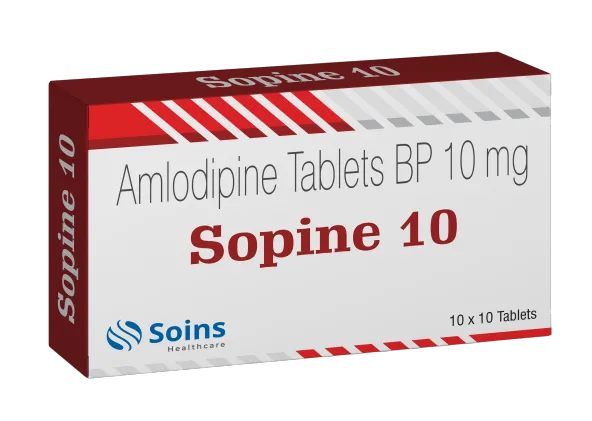
Inhibits the transmembrane influx of calcium ions into vascular smooth muscle and cardiac muscle cells. This selectively relaxes arterial smooth muscle, reducing peripheral vascular resistance and lowering blood pressure.
Amlodipine 10 mg is indicated for the long-term management of chronic cardiovascular disorders:
Hypertension (High Blood Pressure): Used as first-line monotherapy or in combination with other antihypertensive agents to lower blood pressure and decrease the risk of fatal and nonfatal cardiovascular events (primarily strokes and heart attacks).
Chronic Stable Angina: Symptomatic treatment of chronic stable chest pain caused by coronary artery disease.
Vasospastic Angina (Prinzmetal’s or Variant Angina): Treatment of documented or suspected vasospastic episodes in the coronary arteries.
Angiographically Documented Coronary Artery Disease (CAD): In patients without heart failure, it helps reduce the risk of hospitalization for angina and slow the progression of coronary narrowing.
Dosage & Administration
Website Note: Dosage must be individualized by a registered medical practitioner based on the patient’s therapeutic response and tolerability.
Standard Dose:
Hypertension & Angina: The usual initial dose is 5 mg once daily. This may be increased to a maximum dose of 100 mg (one 10 mg tablet) once daily if blood pressure or chest pain control is not achieved within 7 to 14 days.
Administration: Tablets must be swallowed whole with water. They can be taken with or without food, but should ideally be taken at the same time each day.
Special Populations: Small, fragile, or elderly patients, and those with hepatic insufficiency, should be started on a lower dose (typically 2.5 mg once daily) because the drug is heavily metabolized by the liver.
Contraindications & Precautions
Absolute Contraindications: Do not use in patients with known hypersensitivity to amlodipine, other dihydropyridine derivatives, or any component of the tablet. Strictly contraindicated in cases of severe hypotension (low blood pressure), cardiogenic shock, significant aortic stenosis, or unstable heart failure after a heart attack.
Peripheral Edema: Fluid retention resulting in swelling of the ankles or lower legs is a common, dose-dependent side effect caused by localized changes in capillary pressure, rather than systemic fluid overload.
Increased Angina / Myocardial Infarction: Rarely, patients—particularly those with severe obstructive coronary artery disease—may experience worsening chest pain or develop an acute heart attack shortly after starting amlodipine or increasing the dose.
Hepatic Impairment: Because amlodipine is extensively metabolized by the liver and has a prolonged half-life (~30 to 50 hours), titrate the dose slowly and cautiously in patients with severe liver dysfunction.
Potential Side Effects
Common / Mild: Peripheral edema (swelling of ankles/feet), headache, dizziness, flushing (feeling of warmth), palpitations, fatigue, nausea, and abdominal pain.
Less Common / Severe: Severe hypotension, syncope (fainting), worsening of angina, arrhythmia (including ventricular tachycardia), gingival hyperplasia (overgrowth of gum tissue), and cholestatic jaundice or hepatitis.