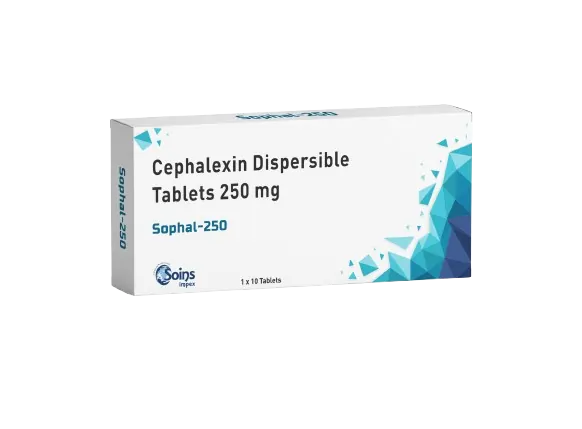
Sophal-250

Sophal-250

Generic Name:
Sophal-250
Therapeutic Category:
Antibacterial / First-Generation Cephalosporin
Mechanism of Action:
Bactericidal action. Cephalexin inhibits bacterial cell wall synthesis by binding to and inactivating penicillin-binding proteins (PBPs). This disrupts the cross-linking of peptidoglycan chains, weakening the bacterial cell wall and leading to cell lysis and death.

Indications (Therapeutic Uses)

Cephalexin 250 mg is a versatile, broad-spectrum antibiotic indicated for the treatment of mild-to-moderate infections caused by susceptible Gram-positive and specific Gram-negative bacteria:

  • Respiratory Tract Infections: Treatment of acute bronchitis, pharyngitis, tonsillitis, and community-acquired mild pneumonia.
  • Otitis Media: Management of middle ear infections, particularly in pediatric patients where a dispersible format is preferred.
  • Skin and Soft Tissue Infections: Alleviation of localized skin infections, including cellulitis, impetigo, furunculosis (boils), and uncomplicated wound infections.
  • Urinary Tract Infections (UTIs): Treatment of uncomplicated acute cystitis caused by susceptible strains of Escherichia coli, Klebsiella pneumoniae, and Proteus mirabilis.
  • Bone and Joint Infections: Management of osteomyelitis and septic arthritis caused by susceptible staphylococci.

Dosage & Administration

Website Note: Dosage and duration must be determined by a registered medical practitioner based on the patient’s age, body weight, and severity of infection. The full course must be completed to prevent bacterial resistance.

  • Standard Adult Dose: Typically 250 mg to 500 mg taken orally every 6 hours (four times daily), or 500 mg every 12 hours. For severe infections, doses up to 4 g per day may be prescribed.
  • Standard Pediatric Dose: Calculated based on body weight, typically 25 mg/kg to 50 mg/kg per day, divided into equally spaced doses (every 6 or 12 hours).
  • Dispersible Tablet Preparation Method:
    1. Drop the tablet into a small amount of boiled and cooled water (approx. 5–10 mL) in a glass or spoon.
    2. Allow the tablet to completely disperse and dissolve into a smooth liquid suspension.
    3. Stir well and consume the entire mixture immediately.
    4. Rinse the container with a tiny bit more water and swallow to ensure the complete dose is taken.
  • Administration Timing: Can be taken with or without food. Taking it with a meal or glass of milk can help minimize potential stomach upset.

Contraindications & Precautions

  • Absolute Contraindications: Do not use in patients with a known history of severe hypersensitivity (e.g., anaphylaxis, immediate rash) to cephalexin, other cephalosporin antibiotics, or any component of the formulation.
  • Penicillin Cross-Sensitivity Risk: Use with extreme caution in patients who have a history of allergic reactions to penicillin antibiotics. Cross-reactivity occurs in approximately 5% to 10% of penicillin-sensitive individuals, which can trigger severe allergic reactions.
  • Clostridium difficile-Associated Diarrhea (CDAD): Treatment alters the normal microbial flora of the colon, which can trigger an overgrowth of C. difficile. Symptoms can range from mild diarrhea to life-threatening pseudomembranous colitis. Discontinue treatment if severe, watery, or bloody diarrhea develops.
  • Renal Impairment Dosing: Cephalexin is excreted unchanged primarily by the kidneys. Patients with severe renal failure (creatinine clearance less than 30 mL/min) require a reduction in daily dosage or extended dosing intervals.

Potential Side Effects

  • Common / Mild: Nausea, vomiting, diarrhea, dyspepsia (heartburn), abdominal pain, mild skin rash, urticaria (hives), and localized genital pruritus or vaginal thrush (candidiasis).
  • Less Common / Severe: Anaphylactic shock, Stevens-Johnson syndrome, toxic epidermal necrolysis, severe C. difficile colitis, transient neutropenia, hemolytic anemia, and reversible interstitial nephritis.