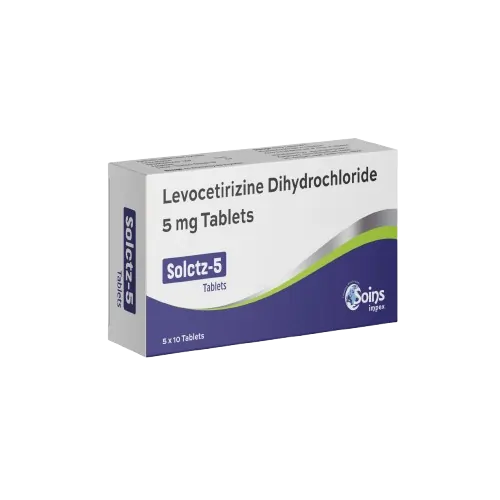
Solctz-5 Tablets

Solctz-5 Tablets

Generic Name:
Solctz-5 Tablets
Therapeutic Category:
Antihistamine / Second-Generation $H_1$-Receptor Antagonist (Active R-enantiomer of cetirizine)
Mechanism of Action:
Selective, peripheral $H_1$-receptor inverse agonist. It blocks the physiological binding of histamine—the primary chemical mediator released during allergic reactions—preventing smooth muscle contraction, capillary permeability dilation, and the sensory nerve activation that triggers itching.

Indications (Therapeutic Uses)

Levocetirizine 5 mg is indicated for the rapid, long-acting symptomatic relief of allergic conditions in adults and children:

  • Allergic Rhinitis (Seasonal & Perennial): Relief of common upper respiratory symptoms such as sneezing, rhinorrhea (runny nose), post-nasal drip, nasal congestion, and itchy, watery eyes associated with indoor or outdoor allergens (pollen, dust mites, pet dander).
  • Chronic Idiopathic Urticaria: Treatment of persistent hives, reducing the frequency, severity, and intense itching (pruritus) of localized skin wheals and lesions with no known cause.
  • Allergic Dermatitis & Insect Bites: Off-label or adjunctive relief for localized inflammatory skin itchiness caused by contact allergies or insect stings.

Dosage & Administration

Website Note: Dosage titration and timing should be directed by a registered medical practitioner. Adjustments are required based on the patient’s age and underlying kidney function.

  • Standard Adult and Adolescent Dose (Ages 12 and older): Typically 5 mg (one tablet) taken orally once daily.
  • Standard Pediatric Dose (Ages 6 to 11 years): 2.5 mg (half a tablet) taken orally once daily. Children under 6 years should utilize oral solution formats for precise dosing.
  • Administration Method: Tablets must be swallowed whole with water, with or without food.
  • Timing: It is highly recommended to take this medication in the evening. While it is a second-generation non-sedating antihistamine, it can still cause mild somnolence (drowsiness) in a small percentage of individuals.

Contraindications & Precautions

  • Absolute Contraindications: Do not use in patients with a verified history of hypersensitivity to levocetirizine, cetirizine, hydroxyzine, or any inactive excipients in the tablet base. Completely contraindicated in patients with severe renal impairment (creatinine clearance less than 10 mL/min) and pediatric patients with any degree of impaired renal function.
  • Central Nervous System (CNS) Depression: Patients should be cautioned against engaging in potentially hazardous occupations requiring complete mental alertness and motor coordination—such as operating heavy machinery or driving—until their individual response to the medication is established.
  • Alcohol & CNS Depressants Interaction: Avoid concurrent consumption of alcohol or other central nervous system depressants (such as sedatives, muscle relaxants, or anti-anxiety medications), as this can lead to additive reductions in alertness and severe drowsiness.
  • Urinary Retention: Use with caution in patients with predisposing factors for urinary retention (e.g., prostatic hypertrophy, spinal cord lesions). Levocetirizine may increase the risk of acute urinary retention.

Potential Side Effects

  • Common / Mild: Somnolence (drowsiness), fatigue, asthenia (weakness), dry mouth, nasopharyngitis (sore throat), and mild dizziness.
  • Less Common / Severe: Hypersensitivity reactions (anaphylaxis, angioedema, severe skin rash), urinary retention, palpitations, tachycardia (increased heart rate), blurred vision, and transient elevations in liver enzymes.