
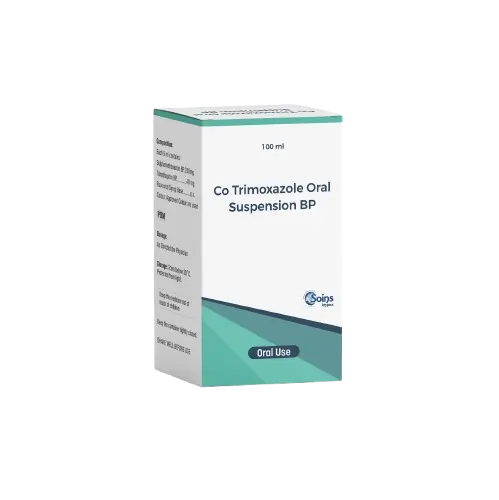
Co Trimoxazole Oral Suspension BP

Co Trimoxazole Oral Suspension BP

Generic Name:
Co Trimoxazole Oral Suspension BP
Therapeutic Category:
Broad-Spectrum Antibacterial / Sulfonamide-Dihydropteroate Synthetase Inhibitor Combination
Mechanism of Action:
Sequential dual-target blockade. Co-trimoxazole consists of Sulfamethoxazole and Trimethoprim in a fixed 5:1 ratio (typically 200 mg Sulfamethoxazole + 40 mg Trimethoprim per 5 mL). It exerts a synergistic bactericidal effect by blocking two consecutive steps in the bacterial synthesis of essential nucleic acids and proteins.
1. Sulfamethoxazole competitively inhibits the enzyme dihydropteroate synthetase, preventing the conversion of para-aminobenzoic acid (PABA) to dihydrofolic acid.
2. Trimethoprim reversibly inhibits dihydrofolate reductase, blocking the conversion of dihydrofolic acid to tetrahydrofolic acid.

Indications (Therapeutic Uses)

Co-Trimoxazole Oral Suspension is a liquid formulation primarily utilized for pediatric populations, elderly individuals, or patients who struggle to swallow solid tablets. It is indicated for treating infections caused by susceptible micro-organisms:

  • Urinary Tract Infections (UTIs): Treatment of uncomplicated acute urinary tract infections, cystitis, and urethritis caused by susceptible strains of E. coli, Klebsiella, and Enterobacter species.
  • Respiratory Tract Infections: Management of acute otitis media (middle ear infections) in children, as well as acute exacerbations of chronic bronchitis in adults.
  • Pneumocystis jirovecii Pneumonia (PCP): Treatment and primary/secondary prophylaxis (prevention) of severe Pneumocystis jirovecii (formerly P. carinii) pneumonia in immunocompromised individuals, such as patients with HIV/AIDS.
  • Gastrointestinal Infections: Treatment of bacterial enteritis or dysentery caused by susceptible strains of Shigella flexneri and Shigella sonnei, or traveler’s diarrhea caused by enterotoxigenic E. coli.

Dosage & Administration

Website Note: The exact dosage volume, frequency, and duration of therapy must be calculated exclusively by a registered medical practitioner based on the patient’s age, body weight, and the severity of the infection. The complete course must be finished to avoid bacterial resistance.

  • Standard Pediatric Dose (Ages 6 weeks to 12 years): Usually calculated based on the trimethoprim component (typically 6 mg to 8 mg of trimethoprim per kg of body weight per day), divided into two equally spaced doses administered every 12 hours.
  • Standard Adult Dose (When liquid is preferred): The typical dose is 20 mL (equivalent to two standard double-strength tablets) administered orally every 12 hours.
  • Administration Method: Shake the bottle thoroughly before every single use to ensure that the sedimented active drug particles are uniformly redistributed throughout the suspension. Measure the precise volume using a calibrated oral dosing syringe or medicine cup.
  • Fluid Intake Requirement: Patients taking co-trimoxazole should maintain a high, adequate daily fluid intake (drinking plenty of water) to ensure a high urine output and completely prevent the risk of drug crystallization in the kidneys (crystalluria).

Contraindications & Precautions

  • Absolute Contraindications: Do not use in individuals with a verified history of hypersensitivity to sulfamethoxazole, trimethoprim, co-trimoxazole, or other sulfonamide (“sulfa”) drugs. Completely contraindicated in patients with significant hepatic parenchymal damage, severe renal insufficiency (where creatinine clearance is less than 15 mL/min), or a history of drug-induced immune thrombocytopenia.
  • Neonatal and Pregnancy Contraindications: Strictly contraindicated in infants under 6 weeks of age due to the high risk of developing kernicterus (severe, brain-damaging jaundice caused by bilirubin displacement). Avoid use during the third trimester of pregnancy for the same reason, and during the first trimester due to antifolate risks.
  • Hematological and Bone Marrow Suppression: Severe, sometimes fatal blood dyscrasias—including agranulocytosis, aplastic anemia, megaloblastic anemia, and thrombocytopenia—have occurred. Use with extreme caution in elderly patients, chronic alcoholics, or individuals with pre-existing folate deficiency. Discontinue immediately if a significant drop in any blood cell count is observed.
  • Severe Dermatological Reactions: Co-trimoxazole can trigger rare but life-threatening skin reactions, including Stevens-Johnson syndrome (SJS) and toxic epidermal necrolysis (TEN). Instruct patients or caregivers to stop the medication and seek emergency medical care at the very first sign of a skin rash, sore throat, fever, or mucosal ulcers.
  • Glucose-6-Phosphate Dehydrogenase (G6PD) Deficiency: Use with caution in individuals with a genetic G6PD deficiency, as sulfonamides can precipitate acute hemolytic anemia (destruction of red blood cells).
  • Hyperkalemia Risk: Trimethoprim acts like a potassium-sparing diuretic and can cause dangerous increases in serum potassium levels (hyperkalemia), especially in elderly patients, those with renal impairment, or individuals taking concurrent medications like ACE inhibitors.

Potential Side Effects

  • Common / Mild: Nausea, vomiting, loss of appetite, abdominal pain, diarrhea, localized skin itchiness, mild rash, headache, and dizziness.
  • Less Common / Severe: Stevens-Johnson syndrome, toxic epidermal necrolysis, severe bone marrow suppression (aplastic anemia, leukopenia, thrombocytopenia), acute hemolytic anemia, drug-induced hepatitis or cholestatic jaundice, hyperkalemia, profound hyponatremia, and acute interstitial nephritis/crystalluria.